Nurse triage
Vital signs and the reason for the visit, before the doctor asks.
The nurse calls the next patient, records the vital signs and the reason for the visit, and sends them on — to the doctor, or straight to the laboratory. By the time the patient sits down, the doctor already has it all.
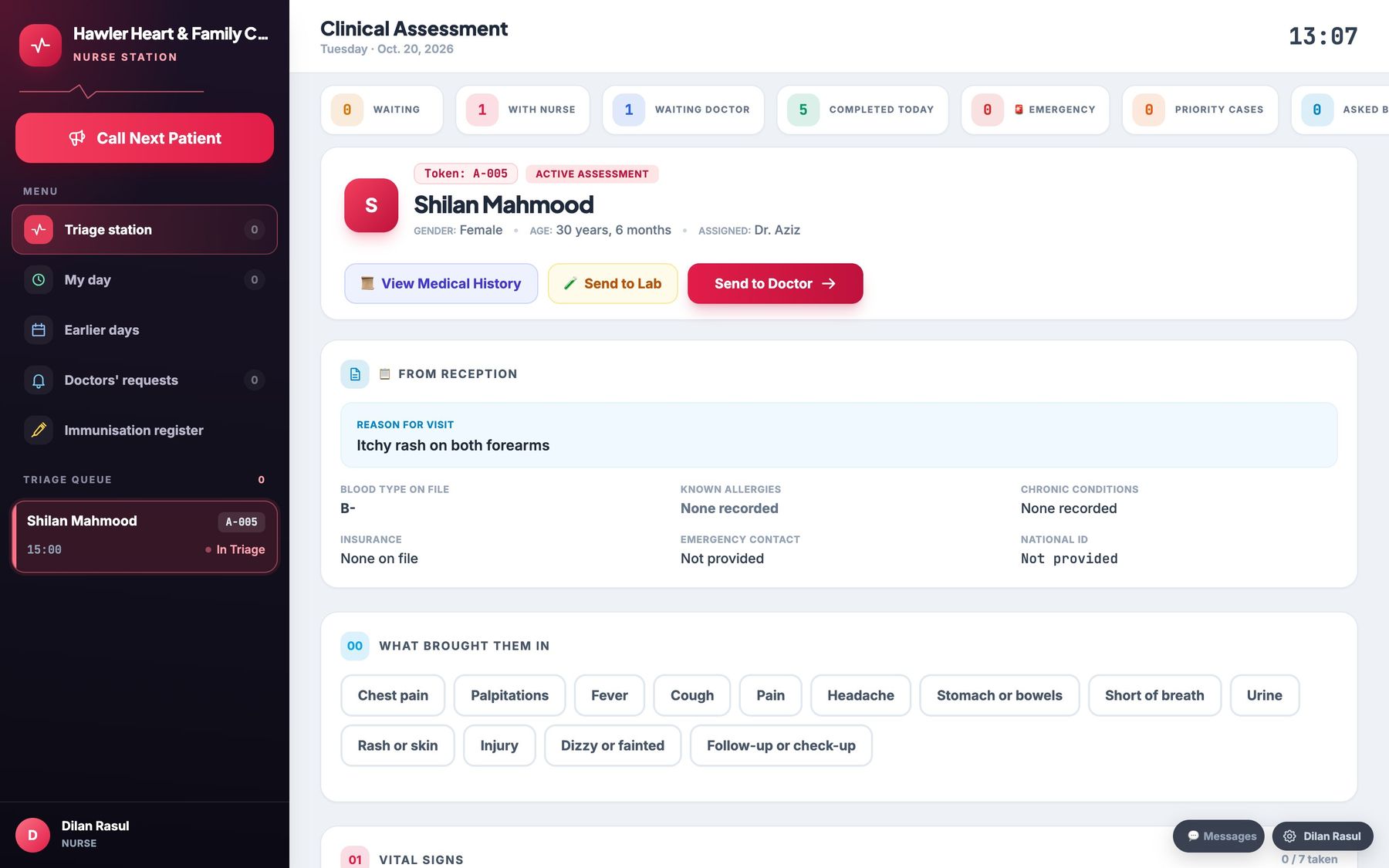
The triage station: the patient’s token, what reception was told, and what brought them in.
Triage queue, vital signs, what brought them in, emergencies first, and tasks the doctor sends back.
Vital signs
Blood pressure, pulse, breathing, oxygen, temperature, weight, height, pain and blood sugar.
What brought them in
One tap for the common reasons, so the doctor starts with the complaint already written.
Emergencies first
Chest pain and other urgent signs jump the queue and are flagged to the doctor.
Tasks from the doctor
Injections, dressings and readings the doctor asks for come back to the nurse as a list.
The details that make the difference.
Everything on this page is in the software today. Nothing here is a promise for later.
- ✓Emergency and priority cases counted at the top of the station
- ✓Tests can be started at triage, so results are ready sooner
- ✓The immunisation register is on the nurse’s screen
One record, shared by every room.
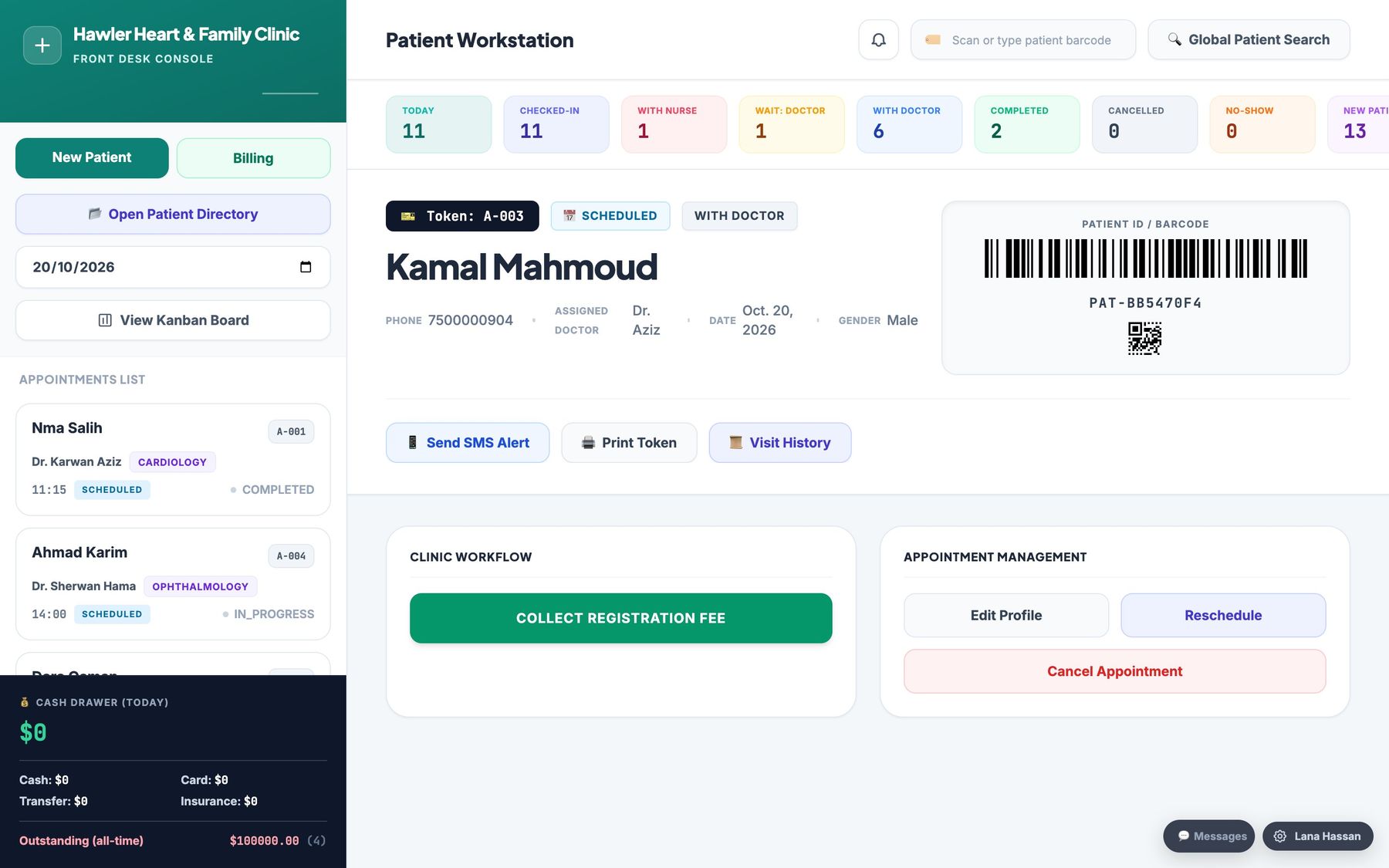
Reception & appointments
Registration, bookings from the desk, the website and the app, check-in, tokens and the waiting-room screen.
Read more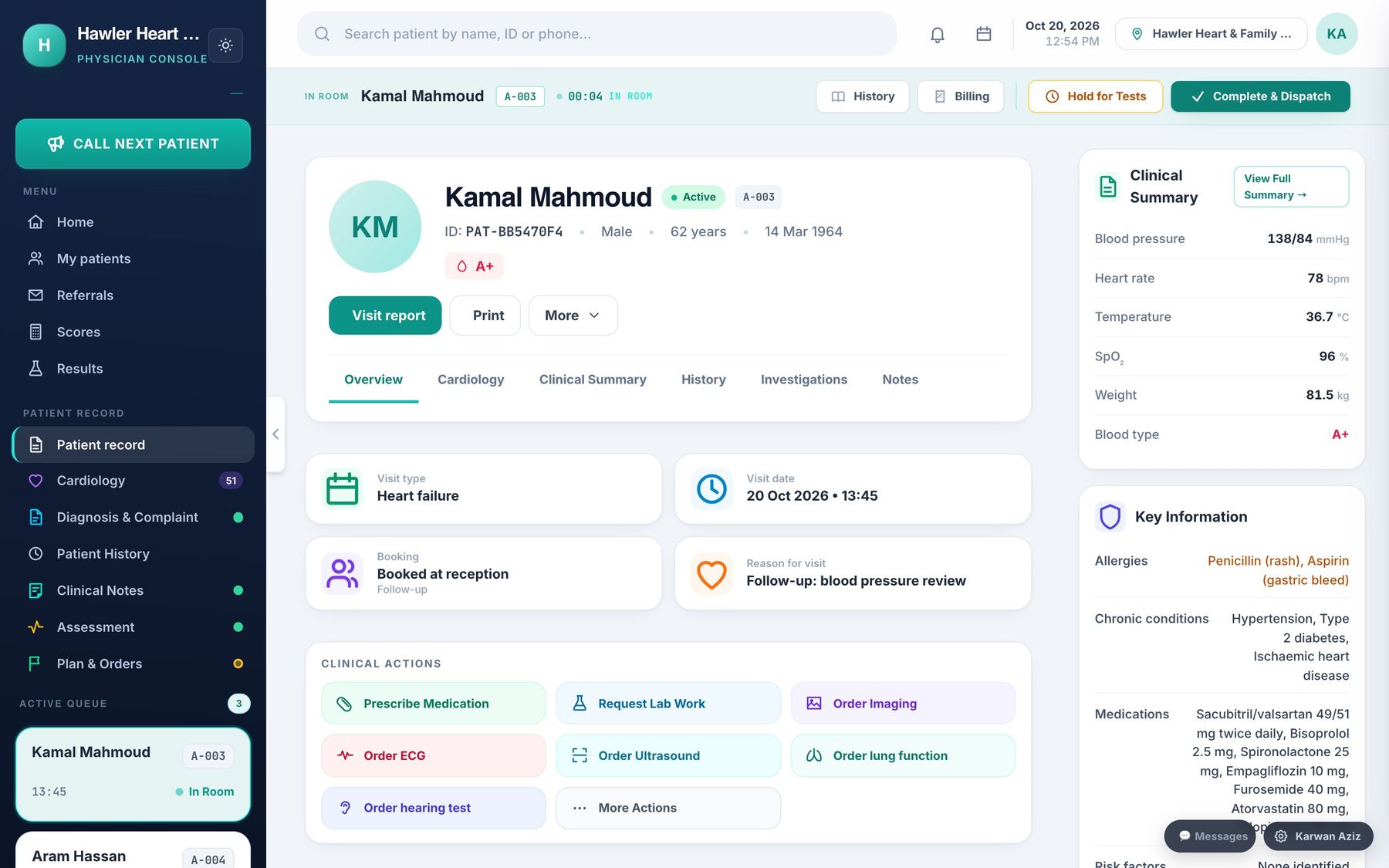
The doctor’s console
One screen for the consultation: notes, specialty chart, orders, prescriptions with allergy checks, and the visit report.
Read more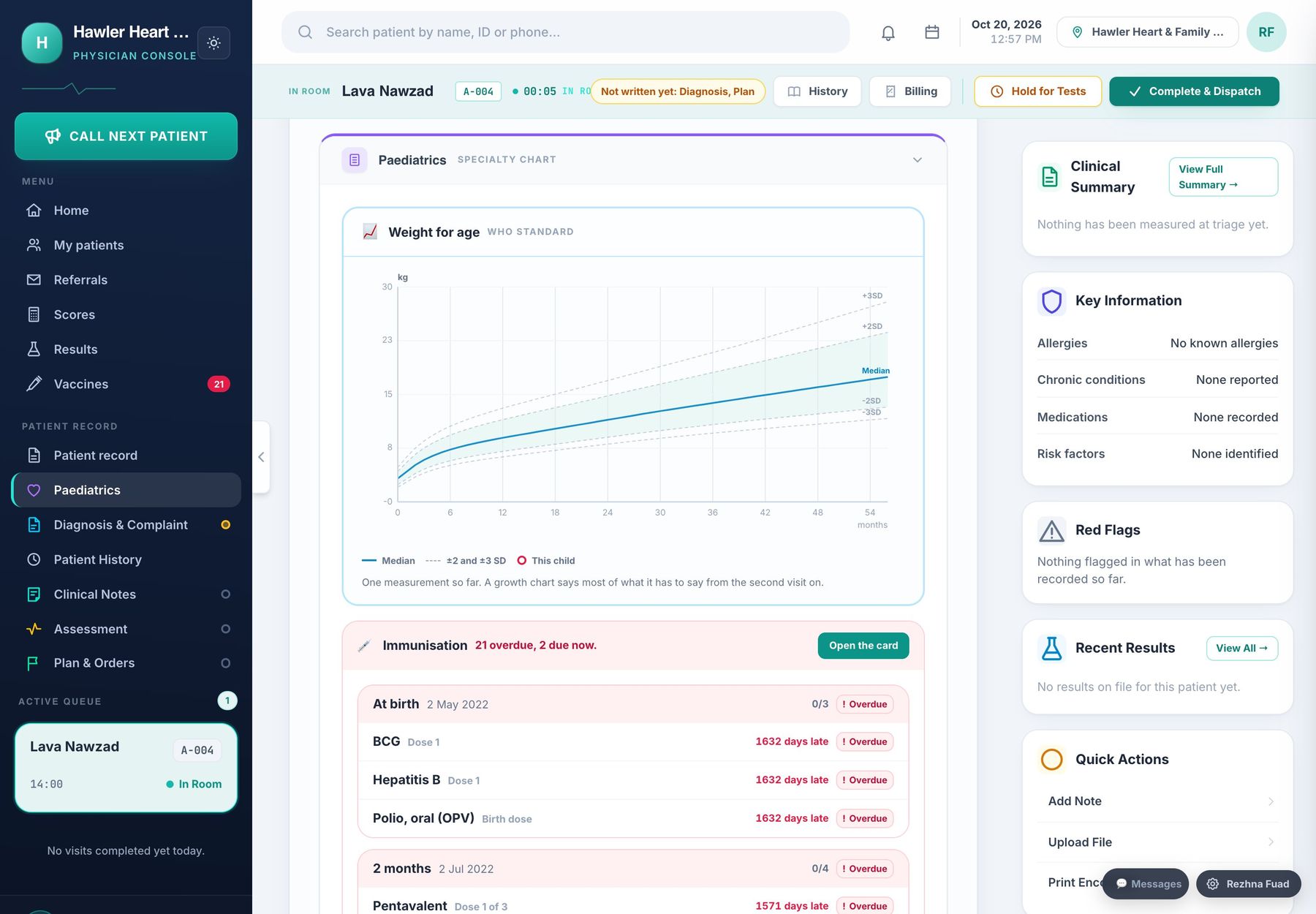
Paediatrics & immunisation
Growth charts, development, feeding and a full immunisation register with what each child is owed.
Read more